
When we talk about a jewelry maker, we often use the term master jeweler or master jeweler. But what does the term "Master" mean?
Since around the reign of Henry IV, crafts have been governed by guilds, and jewelry making is no exception. In order for an apprentice to obtain the right to hallmark their own work, they must pass a master's degree. They then present a masterpiece to a jury of fellow jewelers.
Once they have passed this exam, they are given the title of Master. With the French Revolution, the guild system was dissolved, but access to the profession remained largely unchanged.
Given the exceptional aura surrounding French jewelers, it is common to continue to identify them by this ancient title of Master, demonstrating the respect owed to this profession.
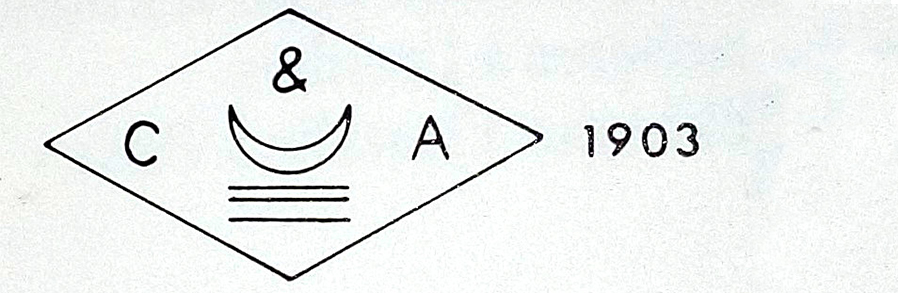
The master's mark is very easily identifiable thanks to its unique characteristics among all existing French hallmarks. Its shape has remained the same since 1797. The hallmark must be diamond-shaped, horizontal or vertical, and consist of the jeweler's initials and a distinctive mark (or symbol). For example, the Cartier house, whose maker's mark changed several times during the 20th century, always features a crescent moon.
It is also officially registered at the Customs Office, where it is stamped on a metal plate for archiving. This process makes it possible to trace the marks of the oldest French goldsmiths and jewelers.
The location of the maker's mark is also regulated. It is found on jewelry on the end rings, near the clasps, or at the bottom of rings; the goal is to ensure that the mark does not visually alter the beauty of the item.
Thanks to the maker's mark, we know which workshop made our jewelry. It guarantees the excellence of French craftsmanship, a reputation that dates back to the Renaissance and continues to this day.
It can also have a huge impact on estimatingthe value of a piece of gold jewelry. It allows you to identify the jewelry brand or a workshop that works with great designers. The presence of a maker's mark indicates that the jewelry comes from a major jewelry house. It is therefore a piece of gold jewelry, not gold-plated jewelry.
Today, this hallmark is proof of Made in France expertise, in an era of globalization and outsourcing. Buying a piece of jewelry bearing a maker's mark is proof that the jewelry is made in France, according to the techniques and requirements of our country's ancestral know-how.
Les Bijouteries Gemme, specializing in second-hand jewelry, can advise you on how to sell your gold at the best price and will be able to tell you how valuable your piece is from a jewelry perspective.