

How can you tell if a piece of jewelry is made of gold and how can you determine the gold content of its alloy? Keep your eyes peeled and check for a hallmark on your pre-owned jewelry. This will tell you a lot about the quality, authenticity, value, and sometimes even the age of your gold jewelry.
Hallmarks: History and Definition
In jewelry, a hallmark refers to a small tool used to discreetly mark a piece of jewelry to guarantee its gold, platinum, or silver content. The mark thus created, also called a hallmark by metonymy, attests to the jewelry's authenticity.
The first hallmarks were used to guarantee the quality, origin, and authenticity of goldsmithing work from the 13th century. They would subsequently evolve over the centuries. The official seals still in use today were mostly established in 1838. Regulated by the Paris Mint and the customs service, they are common to jewelry, fine jewelry, goldsmithing, and watchmaking.
Guarantee hallmarks are distinguished from master hallmarks and responsibility hallmarks:
• Guarantee hallmarks follow a precise and official code designed to identify the precious metal used and its content.
• The master hallmark corresponds to the signature of the jeweler or goldsmith. It authenticates the era and original jewelry house of an antique or contemporary piece.
• The responsibility hallmark, or importer's hallmark, corresponds to the mark that must be affixed to precious metal jewelry imported from abroad.
The different hallmarks by type of purity
Three hallmarks currently distinguish the purity of gold jewelry:
• The eagle's head

The eagle's head in profile is the hallmark for 18-karat gold. It is affixed to jewelry made of an alloy of 750 thousandths of gold and 250 thousandths of other metals: generally 125 thousandths of copper and 125 thousandths of silver for yellow gold; 200 thousandths of copper and 50 thousandths of silver for rose gold; 250 thousandths of silver and/or palladium for white gold.
• The scallop

The scallop shell motif is the hallmark in force for 14-karat gold jewelry and goldsmith pieces. It marks 585 gold alloys, composed of 585 thousandths of fine gold and 415 thousandths of other metals (silver, copper, palladium), the proportions of which vary depending on the desired color (yellow, white, or rose gold).
• The clover

The hallmark, representing a classic 3-leaf clover, is affixed to jewelry and other gold works weighing more than 3 grams whose alloy is composed of 375 thousandths of fine gold. It is also referred to as 9-carat gold. The remaining 625 thousandths are composed of other metals.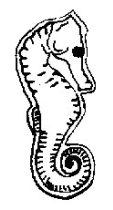 We can add to these three hallmarks that of the seahorse, dedicated to pure gold (999 thousandths). Extremely rare in jewelry, it is mainly used to mark ingots.
  The owl hallmark, for its part, marks low-grade gold works (less than 375 thousandths), as well as works of uncertain or foreign origin.
Ancient Hallmarks
An expert appraisal of antique jewelry requires knowledge of hallmarks that may have been in use before the 20th century. Recognizing them also allows the jewelry to be dated. There are many of them, but some are worth mentioning:
 The ram's head motif used to guarantee 750 thousandths gold jewelry and works made in Paris between 1819 and 1838
 The horse's head motif that marks gold jewelry made in the provinces from 1838 to 1919
 The rhinoceros head motif hallmarked every 10 cm on gold chains. The weevil motif on 18-karat gold jewelry imported in the 19th century.
 The Mercury head motif marking 750 gold items intended for export between 1879 and 1994.
Guarantee hallmarks for other metals Precious
State guarantee hallmarks are also provided for other precious metals widely used in jewelry: silver and platinum.
 The Head of Minerva is thus affixed to jewelry weighing more than 30 grams whose alloy is predominantly composed of silver: the mark 1 is used for 925 thousandths silver and the mark 2 is used for 800 thousandths silver.
 Platinum jewelry will bear the penguin hallmark associated with pure platinum (999 thousandths) since 2002. The dog's head is affixed to 950, 900, and 850 thousandths platinum jewelry, with the mention 1, 2, or 3 respectively to distinguish them.
How is jewelry hallmarked?
When you buy a pre-owned gold ring, you can examine it with a magnifying glass to identify its guarantee hallmark. This could have been achieved during the jewelry's manufacture or upon its entry into the country, in three different ways:
• Traditional method, manual or mechanical
Used since the 17th century, the manual impact marking method involves exerting pressure on the metal by hammering, leaving a pre-formatted imprint in the material. Traditional punching can be performed manually or automatically, following the same principle.
• Electro-erosion
Since the late 1960s, the electro-erosion, or spark-blasting, method of punching can be used to mark delicate jewelry, particularly hollow models. It avoids the risk of deformation that can occur with the traditional hammering method.
• Laser marking
The most recent and innovative method, laser punching allows for the marking of small patterns that remain very clear and therefore easily readable with a magnifying glass (e.g., a magnifying glass). However, it should be avoided when hallmarking a ring or a gold bracelet on the inside, as prolonged contact with the skin risks eroding the hallmark.
French and International Legal Obligations
In France, the tax code stipulates that jewelry and other precious objects weighing more than 3 grams made of gold, silver, or platinum must be marked with the maker's mark, the guarantee mark, and the responsibility mark (if applicable).
The hallmarks mentioned above have been in use in France since 1838. Other hallmarks are used internationally by countries that ratified the Vienna Convention on the Control and Hallmarking of Articles of Precious Metals in 1972. It is a diamond in which the proportion of gold in thousandths is indicated: 375, 585, 750, 916, 925, 950, 990, or 999 thousandths. 18-carat jewelry corresponds to 750 gold.
To have your gold jewelry valued online, it may be helpful to provide a photograph of the hallmark to help the jewelry expert identify whether it bears a French or international hallmark. Gemme Jewelry, specialized in antique jewelry and gold purchases in Lyon, also values your rings and other pieces of gold marked with hallmarks prior to 1838.